

Nested URL Paths Support Guide
Overview
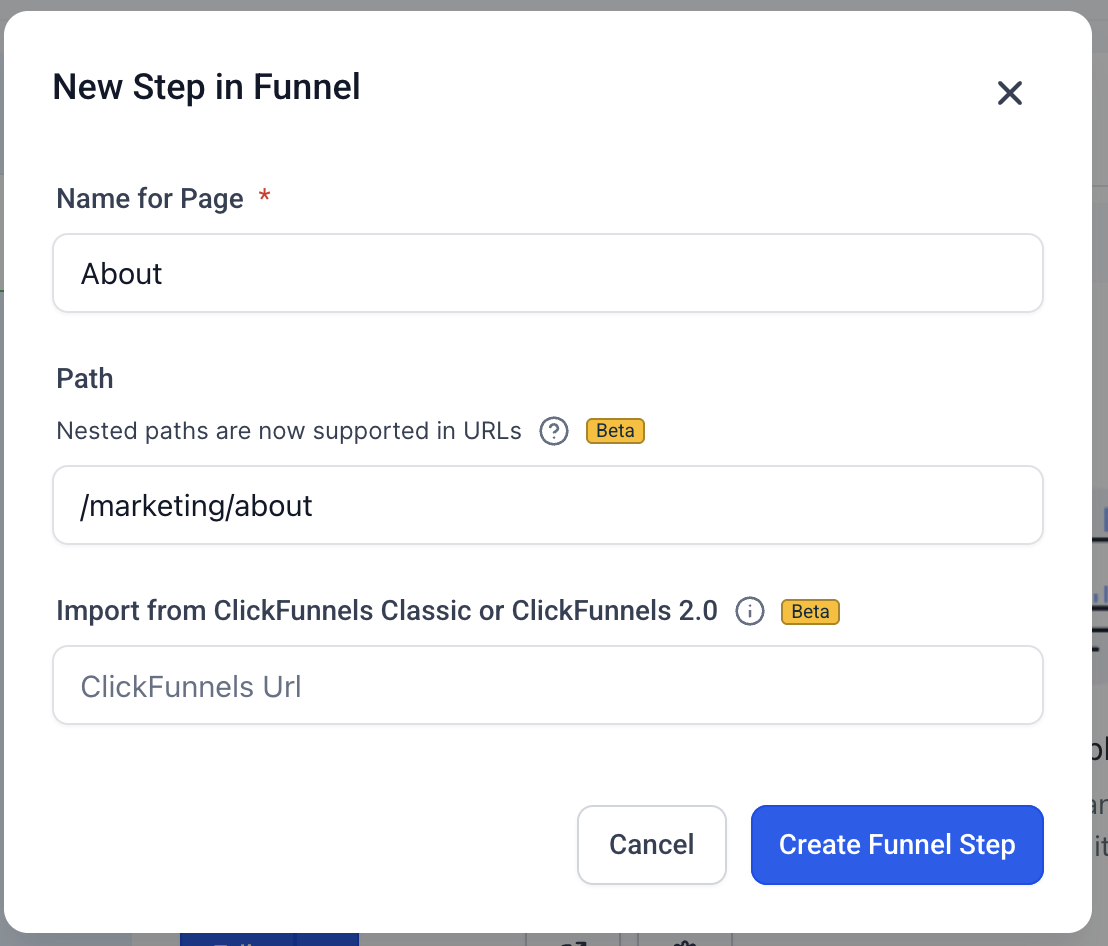
The Nested URL Paths feature allows you to create hierarchical URLs for your funnels, websites, and webinars using forward slashes (/) to represent site structure. Instead of slashes being converted to hyphens, you can now define meaningful nested paths that reflect your content organization and improve SEO.
Examples of Nested Paths
/resources/courses/sales-funnel
/webinars/2025/summer-session
/campaigns/holiday/black-friday-offer
/funnels/product-launch/step-1
How to Use Nested URL Paths
- Go to any funnel, website, e-commerce, or webinar page or step.
- Click Edit.
- Enter your desired nested URL path, using / to create hierarchical structures.
Path Validation and Restrictions
Reserved Paths
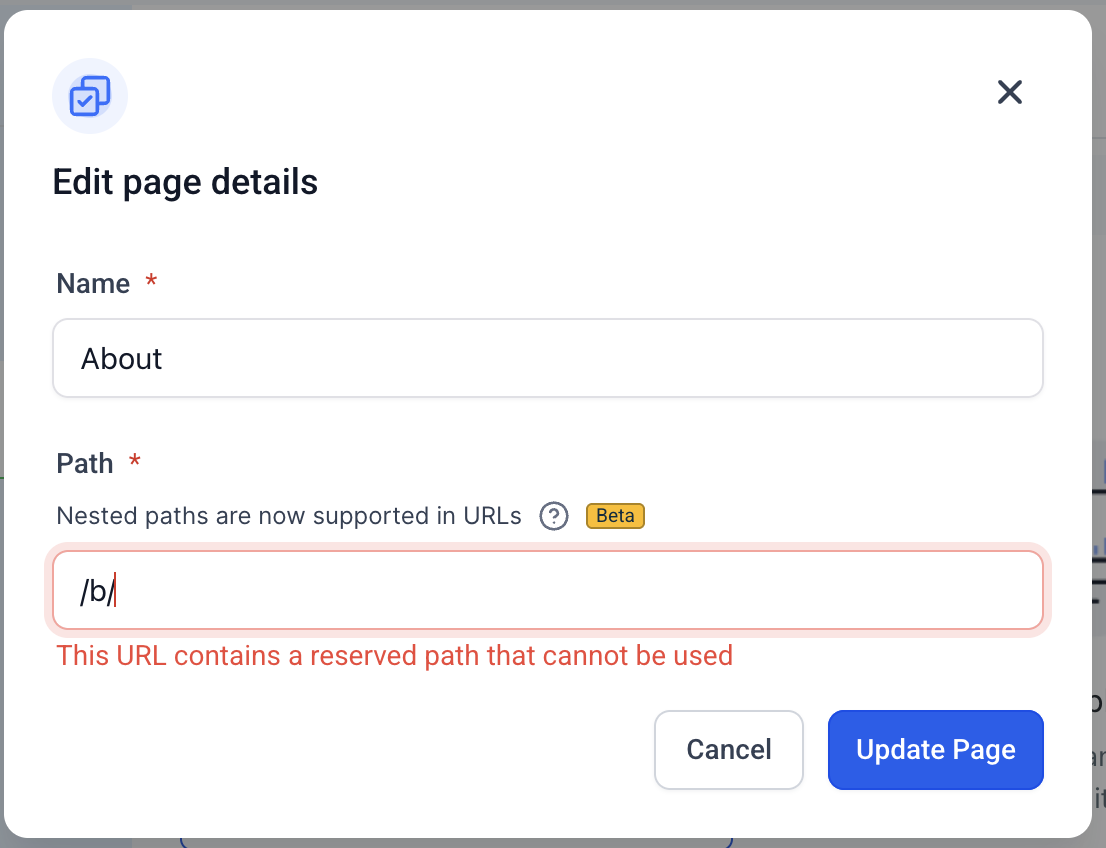
Certain paths are reserved for system functionality and cannot be used. Attempting to use them will result in an error message.
System Routes
/b/, Reserved for blogs functionality
/c/, Reserved for categories
/product/, Reserved for product pages
/collections/, Reserved for collection pages
/post/, Reserved for blog posts
/category/, Reserved for category pages
/author/, Reserved for author pages
/tag/, Reserved for tag pages
/store/account, Reserved for store account functionality
Best Practices
Avoid trailing slashes - Use clean, canonical paths without a trailing slash (e.g., /path/subpath instead of /path/subpath/).
Eliminate double slashes - Ensure there are no duplicate slashes in your paths (e.g., /path/subpath, not /path//subpath).
No empty segments - Avoid leaving blank segments between slashes (e.g., use /category/item, not /category//item).Use descriptive, meaningful paths - Clearly communicate the content and its hierarchy with readable, intuitive URLs (e.g., /blog/seo-tips instead of /b/123).
Organize logically - Structure paths in a way that makes sense to visitors and mirrors your site's navigation or content hierarchy.
Optimize for SEO - Well-nested, keyword-rich paths can boost search engine rankings by signaling clear content relationships.
Conclusion
Nested URL paths offer powerful flexibility for organizing your content and improving your site's SEO. By following these guidelines and avoiding reserved paths, you can create a well-structured, hierarchical website that's both user-friendly and optimized for search engines.
Always test your nested paths thoroughly and ensure they align with your overall site architecture and marketing goals.
More in Funnels & Websites Builder
- Cookie Policy Details
- Marketing Tools to use in Funnel/Website - Cookie Banner
- Migration of existing domains
- How to Use the Cookie Consent Banner in Funnels & Websites
- Guide: Funnel & Website Stats Definitions
- Funnels & Websites - Schema Markup Generator
- How to Create a Funnel Using Templates, Forms, and a Custom Domain
- Create Blog Posts with AI
- Product Media Layouts for the Product Details Page
- Border Control in Page Builder
- Entrance Animations for Sections, Rows & Columns
- Make Your Sites AI-ready with llms.txt